
If you own a home, or you’re thinking about buying, selling or simply keeping an eye on the market, working out which blogs to follow about real estate can save you a lot of wasted reading time.
Australia has no shortage of property commentary, and not all of it is written with your interests in mind. Some sources exist to sell you something. Others exist to inform you, whether or not that information leads to a transaction.
This guide sets out fifteen genuinely useful places to read about Australian real estate, from official government data to independent analysts who publish their reasoning in public. None of them are ranked as “the best” in a competitive sense. They are simply reliable, and each does a different job.
What Makes A Property Blog Worth Following

Before the list, it helps to know what separates a useful property blog from a marketing exercise dressed up as news.
- It shows its sources.
- Good property commentary points to the underlying data, whether that’s the Australian Bureau of Statistics (ABS), the Reserve Bank of Australia (RBA), or a named research house.
- It separates fact from forecast.
- Nobody, including realCLEAR, can reliably predict where prices are headed. Trustworthy sources say so.
- It discloses its interest.
- A blog run by a lender, agency or developer isn’t automatically untrustworthy, but you should know who is writing and why.
- It updates on a schedule.
- Property data moves quarterly or monthly. A blog that hasn’t been touched in a year is not a current source.
With that in mind, here are the blogs, data hubs and research bodies worth bookmarking.
Blogs To Follow About Real Estate: Official Data And Research Sources
These are the primary sources. Most independent commentary, including much of what appears further down this list, is built on the numbers these organisations publish first.
1. Cotality Insights (formerly CoreLogic) publishes monthly and weekly analysis of dwelling values, listings and sales activity across every capital city, drawing on its own Home Value Index. It is one of the most widely quoted data sources in Australian property journalism. Read it at cotality.com/au/insights.

2. The Reserve Bank of Australia’s Publications hub is not written as a blog, but its Statement on Monetary Policy and Financial Stability Review, released several times a year, contain some of the clearest explanations available of how interest rates, household debt and housing credit interact. Find them at rba.gov.au/publications.
3.The ABS ceased its Residential Property Price Indexes series after the December quarter 2021. The Total Value of Dwellings publication carries forward some of that data (median prices, transfers, total stock value) but is not a direct like-for-like replacement for a price index. ABS Total Value of Dwellings Methodology
4. ASIC’s Moneysmart is the federal government’s consumer finance site, and its property investment section is written specifically to help ordinary Australians, not investors with existing portfolios. It covers home loans, buying an investment property and the risks of using superannuation to buy property. Visit moneysmart.gov.au/property-investment.
5. The Real Estate Institute of Australia (REIA) is the federated national body for the state and territory real estate institutes, representing the large majority of Australian agencies. It publishes housing affordability reports and market facts drawn from data across the country. See reia.com.au.
6. Domain’s Research and Insights hub publishes house price reports, auction clearance data and rental vacancy figures, and is a useful counterpart to Cotality’s numbers since the two organisations sometimes reach slightly different conclusions from different datasets. Read it at domain.com.au/research.
Independent Analysts And Industry Commentary
These sources are written by named individuals with long track records in Australian property analysis. They carry more personal opinion than the government and data sources above, so it’s worth reading them as one perspective among several rather than as settled fact.
7. Property Update, founded by buyer’s agent and commentator Michael Yardney, brings together a wide range of contributors writing on investment strategy, market cycles and finance. Visit propertyupdate.com.au.
8. The Real Estate Conversation focuses on the economics and policy side of the industry, with contributions from various property economists. See therealestateconversation.com.au.
9. Matusik, run by long-time residential analyst Michael Matusik, offers commentary grounded in decades of on-the-ground research into what buyers and renters actually want. Visit matusik.com.au.
10. Pete Wargent’s blog covers macroeconomic trends and how they flow through to Australian housing, written by a property and funds management commentator based in Australia. Read it at petewargent.blogspot.com.
11. SQM Research, founded by analyst Louis Christopher, is best known for its weekly asking prices index, vacancy rate data and its annual “Boom and Bust” forecast report. It is frequently cited for its independence from the major real estate portals. See sqmresearch.com.au/property.

Industry Bodies And State Authorities
12. The Property Council of Australia’s Property Australia covers commercial, retail and residential development from an industry advocacy perspective, useful if you want to understand how planning and construction issues affect future housing supply. Visit propertycouncil.com.au/news-research/property-australia.
13. realestate.com.au News aggregates market data with everyday buying, selling and renting advice, and is one of the most visited property news sources in the country given the scale of the parent site. See realestate.com.au/news.
14. Your state or territory’s consumer affairs or fair trading authority. This isn’t a single blog, but every state and territory publishes plain-English guidance on the legal side of buying, selling and renting, and the rules genuinely differ between jurisdictions. Examples include NSW Fair Trading, Consumer Affairs Victoria and the Queensland Office of Fair Trading. We look at one example below.
15. Real Estate Investar, a Gold Coast-based blog focused specifically on the investment side of the market, covering financing, portfolio strategy and data tools for people building a property portfolio rather than buying a home to live in. Visit realestateinvestar.com.au.
Comparing A Few Of These At A Glance
| Source | Best for | Publishing frequency | Written by |
|---|---|---|---|
| Cotality Insights | National and city-level price data | Weekly / monthly | In-house data analysts |
| RBA Publications | Interest rates and household finance context | Several times a year | Reserve Bank economists |
| ASIC Moneysmart | Plain-English first home buyer guidance | Ongoing, government maintained | Government consumer educators |
| Property Update | Investment strategy and opinion | Frequent, multi-author | Michael Yardney and contributors |
| SQM Research | Independent price and vacancy forecasting | Weekly, with an annual report | Louis Christopher |

A Worked Example: Reading Blog Data Before Making A Decision
Here is an illustrative scenario, not a real case study. Imagine a Brisbane homeowner named Sarah is wondering whether to sell this year. She reads Cotality’s latest monthly figures and notes that Brisbane dwelling values have been softer in recent months than earlier in the cycle. She then checks the ABS Total Value of Dwellings release to see how Queensland compares with other states, and reads REIA’s housing affordability report to understand what buyers in her price bracket can currently borrow.

None of this tells Sarah whether to sell. It simply gives her a clearer, multi-source picture of current conditions, which she can bring to a conversation with a professional, whether that’s an accountant, a financial adviser or a property adviser such as realCLEAR. This is the point of following several blogs to follow about real estate rather than just one: no single source has the full picture, and cross-checking is how you avoid being steered by whichever outlet has the loudest headline that week.
State Spotlight: How Cooling-Off Periods Work In NSW
Because property law is set at state and territory level in Australia, it’s worth seeing how one jurisdiction actually works in practice. This example covers New South Wales only. Other states and territories run comparable but different systems, and readers elsewhere should always confirm current requirements with their own state or territory authority.
In NSW, most residential property bought by private treaty (that is, not at auction) comes with a statutory cooling-off period of five business days, starting from the day contracts are exchanged. During this window, a buyer can withdraw from the contract, though they will generally forfeit 0.25 per cent of the purchase price to the seller.
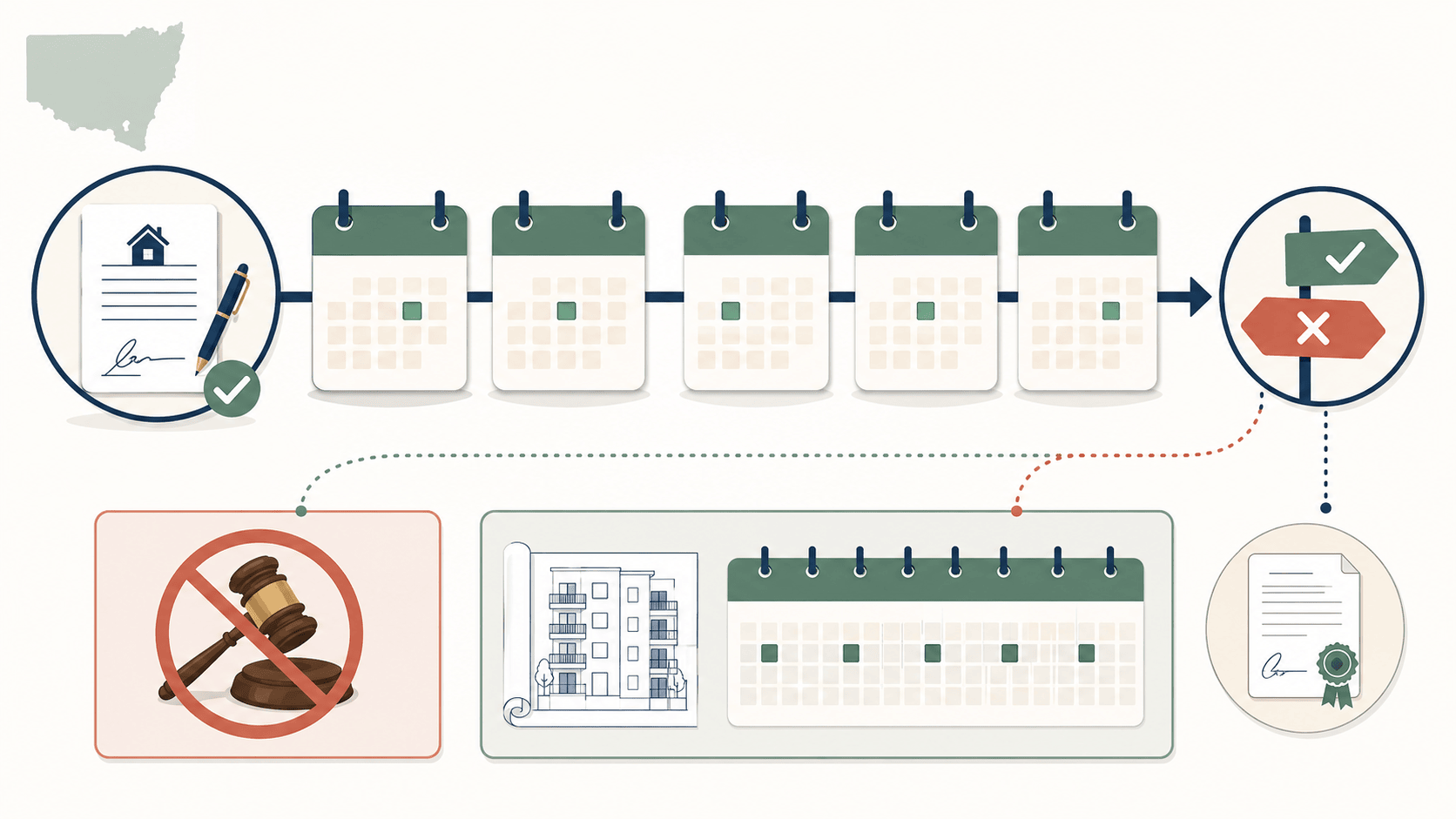
Weekends and NSW public holidays don’t count towards the five days. There is no cooling-off period for properties bought at auction, or on the same day as an auction if the property was passed in. Off-the-plan purchases carry a longer, ten business day cooling-off period.
Buyers can also waive their cooling-off rights entirely by providing the seller with a signed certificate from their solicitor or conveyancer, known as a section 66W certificate, which is common in competitive negotiations. Full detail is available directly from NSW Fair Trading and the NSW Government’s property buying guide.
This is state-specific information for NSW only. It is not general legal advice, and anyone relying on it for an actual transaction should confirm the current position with a qualified conveyancer or solicitor.
How To Read Property Blogs Without Losing Perspective
A few habits help keep property reading useful rather than stressful.
- Check the date. Property data ages quickly. A figure from eighteen months ago may no longer reflect current conditions.
- Notice who benefits from the story. A blog run by a mortgage broker, developer or agency may be entirely accurate and still be selective about what it emphasises.
- Treat forecasts as opinions. Even well-researched forecasts are estimates, not guarantees. realCLEAR does not make price predictions, and readers should be cautious of any source that states future prices with confidence.
- Compare more than one source. As in the worked example above, checking a government data release against an independent analyst’s take on it tends to produce a more balanced picture than reading either alone.
Frequently Asked Questions
- Are property blogs a reliable substitute for professional advice?
- No. They’re a good starting point for understanding the market, but decisions about buying, selling or holding property, and any related tax or legal question, should involve a licensed professional such as a conveyancer, financial adviser or accountant.
- Which of these blogs to follow about real estate are free to read?
- All fifteen listed here are free to access, though some, including SQM Research’s full annual report, charge for their most detailed products. The core commentary and data summaries are publicly available.
- Do government sources like the ABS or RBA count as “blogs”?
- Not in the traditional sense, but their publications are written in accessible language and updated regularly, which makes them genuinely useful reading for homeowners, even if the format is a data release rather than a blog post.
- How often should I actually check these sources?
- It depends on your situation. If you’re not currently buying or selling, checking in quarterly, around when the ABS and REIA release their major reports, is usually enough. If you’re actively in the market, monthly is more useful.
- Is it worth paying for a subscription property newsletter?
- It depends on what you need. Free sources like Cotality’s monthly insights and Domain’s research hub cover most homeowners’ needs. Paid products tend to suit investors or professionals who need granular suburb-level data.
- Why do different sources sometimes report different price figures for the same city?
- Cotality, Domain, the ABS and SQM Research each use different data collection methods and different definitions of “value”, which is why their figures can diverge slightly even when describing the same market. This is normal and not a sign that one source is wrong.
- Should I trust a blog that predicts exactly how much prices will rise or fall?
- Treat specific numerical predictions with caution. Even experienced analysts differ significantly in their forecasts, and past performance in one cycle doesn’t guarantee accuracy in the next. It depends on too many variables, including interest rates, population growth and government policy, to be stated with certainty.
- Do these blogs cover regional and rural property, or just capital cities?
- Coverage varies. Cotality, the ABS and Domain all publish regional data alongside capital city figures. Independent blogs vary in how much regional detail they include, so it’s worth checking a source’s coverage before relying on it for a regional property.
- Can I get help understanding what a particular blog’s data means for my own property?
- Yes. If you’d like a second opinion on what current market information means for your specific situation, realCLEAR offers property management services and can be reached through our Contact Us page for a free, no-obligation conversation.
- Does realCLEAR write its own market commentary?
- Yes, alongside our property management services, we publish articles like this one to help Australians understand the market context behind decisions to sell, rent, buy or simply wait.

Wrapping Up
There is no shortage of property commentary in Australia, and plenty of it is written to sell you something rather than inform you. The fifteen sources above, from the ABS and RBA through to independent analysts like Louis Christopher and Michael Matusik, are a genuinely useful starting point if you want a clearer, more balanced picture of the market you’re in.
None of this replaces advice tailored to your own circumstances. If you’ve been reading the numbers and you’re still not sure what they mean for your own home, whether that’s a question about selling, renting it out, or simply understanding what it’s currently worth, realCLEAR is happy to talk it through.
We’d rather tell you to wait than talk you into a decision that isn’t right for you. Book a free, no-obligation conversation through our Contact Us page and we’ll help you make sense of what you’ve read.
Disclaimer: This article is for general information only. It is not legal, financial or tax advice. Property laws and rules vary between Australian states and territories, and they change over time. Always confirm current requirements with your own state’s fair trading or consumer affairs authority. Seek independent professional advice before making property decisions.








Join The Discussion