
Published by realCLEAR, independent property advice, not sales pressure.

Most people think of the real estate market as something that happens to them, a place where prices rise, prices fall, and decisions get made under pressure. But whether you’re buying your first home, selling an investment property, or considering a career in real estate itself, the process teaches you far more than most people expect.
This article looks at the practical skills that you can learn in the real estate market not just the technical knowledge agents and property professionals develop on the job, but also the financial literacy, negotiation, and decision-making skills that everyday buyers, sellers and investors pick up simply by going through the process properly.
As always, this isn’t a sales pitch. At realCLEAR, we believe informed participants make better decisions than passive ones, and understanding the skills below is part of what makes someone a more confident, capable participant in the market, regardless of whether they ever sell a house professionally.
Why This Matters, Whether You’re Buying a Career or a Home
There are really two audiences for this topic, and it’s worth being upfront about both:
- People considering a career in real estate, as an agent, property manager, buyer’s agent, valuer, or in property development, who want to understand what the job actually demands day-to-day.
- Everyday Australians buying, selling, or investing in property, who don’t work in the industry, but who develop real, transferable skills every time they go through a transaction properly.
Both groups benefit from the same underlying set of skills. The difference is depth and frequency: a professional uses these skills daily, while a homeowner might use them only a handful of times in their life , CoreLogic research has previously put Australia’s median hold period (the typical gap between sales of the same home) at around nine years, though this figure moves over time and varies by area, so it shouldn’t be read as a fixed national rule.
That infrequency is exactly why building these skills deliberately, rather than learning by accident under pressure, makes such a difference.
Core Skills That You Can Learn In The Real Estate Market

1. Financial Literacy and Budgeting
Buying or selling property forces a level of financial clarity that few other transactions require. You need to understand:
- How loan serviceability is assessed by lenders, including how the Australian Prudential Regulation Authority’s (APRA) mortgage serviceability buffer factors into how much you can borrow.
- The difference between your borrowing capacity and what you can comfortably afford to repay.
- How to budget for costs beyond the purchase price — stamp duty, conveyancing, building and pest inspections, and loan establishment fees.
For professionals, this translates into being able to talk clients through affordability honestly, rather than simply chasing the highest price a lender will approve.
2. Negotiation
Negotiation is arguably the most transferable skill the property market teaches. Every transaction — whether you’re negotiating a purchase price, a settlement date, special conditions in a contract, or an agent’s commission — is an exercise in balancing your interests against someone else’s, without damaging the relationship needed to get the deal done.
Real estate agents negotiate for a living, but buyers and sellers who go through even one or two transactions often find the experience carries over — the same discipline can apply just as well to a salary discussion or a trade quote on a renovation.
3. Due Diligence and Research Skills
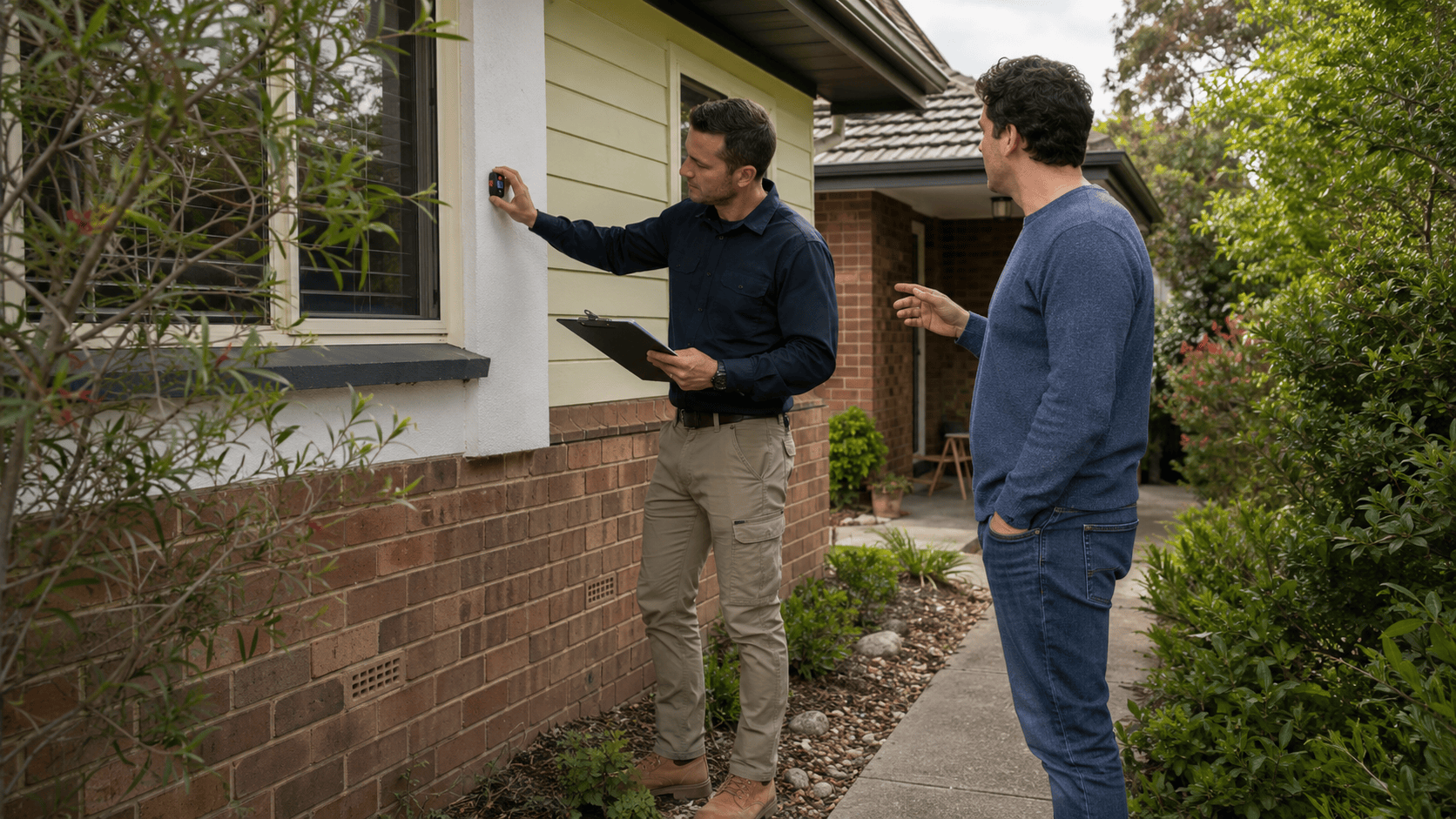
Property transactions require a level of research discipline that most people don’t apply anywhere else in daily life:
- Reading and understanding a Contract of Sale and, in some states, a vendor’s disclosure statement.
- Interpreting a building and pest inspection report.
- Checking title, zoning, and easement information through the relevant state Land Registry Services.
- Comparing recent, genuinely comparable sales — not just asking prices — to assess value.
This is a skill with obvious professional application (valuers and buyer’s agents do this for a living), but it’s equally valuable for a first-home buyer trying to avoid overpaying, or an investor assessing whether a property will perform.
4. Legal and Contractual Literacy
Property law varies significantly between Australian states and territories, which means anyone involved in a transaction — professional or private — has to get comfortable reading legal documents carefully rather than skimming them. This includes:
- Understanding cooling-off periods, which differ by state and, in some cases, by property type.
- Knowing what a “subject to finance” or “subject to building inspection” clause actually protects you from.
- Understanding the difference between exchange of contracts and settlement.
None of this replaces the need for independent legal advice — it shouldn’t — but developing a working literacy in these terms means you ask better questions of your solicitor or conveyancer, rather than simply signing what’s put in front of you.
5. Risk Assessment
Real estate, by its nature, involves weighing risk against reward: market risk, interest rate risk, tenant risk (for investors), and settlement risk. Learning to separate genuine risk from market noise — headlines about prices rising or falling, for example — is a skill in itself.
“The property market rewards people who can tell the difference between a real risk and a loud headline.”
This is a skill professionals build through repetition and market cycles. Everyday buyers and sellers build it more slowly, but the underlying discipline — asking “what specifically could go wrong here, and how likely is it?” — applies well beyond property.
6. Communication and Relationship Management
Every property transaction involves multiple parties: buyers, sellers, agents, conveyancers, lenders, and often building inspectors or tradespeople. Managing that many relationships, often under time pressure, teaches:
- Clear, timely communication — particularly in writing, since most contractual communication happens by email.
- Managing expectations, especially when timelines slip (which they frequently do).
- Reading when a negotiation has genuinely stalled versus when it simply needs more time.
For agents and property managers, this is the core of the job. For everyday participants, it’s often the most stressful part of a transaction — and the one that improves the most with experience.
7. Project Management (Renovating, Developing, or Managing an Investment)
Anyone who has renovated a property, managed a rental, or overseen a small development project has, in effect, run a project: setting a budget, sequencing trades, managing delays, and adjusting scope when something doesn’t go to plan. These are genuinely transferable project management skills, regardless of whether the person involved ever calls themselves a “project manager.”
8. Market Analysis
Understanding how to read market data — rather than headlines about it — is a skill in its own right. This includes knowing the difference between:
- Median price movements and the performance of an individual property (they’re often not the same thing).
- Auction clearance rates, which reflect competition on a given weekend rather than overall price direction.
- Days-on-market figures, which can indicate how quickly buyer demand is absorbing new listings in a particular area.
Sources such as the Cotality (formerly CoreLogic) Home Value Index, the Australian Bureau of Statistics, and the Real Estate Institute of Australia (REIA) all publish data that, read carefully, can inform a more grounded view of a local market than social media commentary or anecdotes at a barbecue.
Skills Specific to a Career in Real Estate
For those specifically considering real estate as a profession — whether as a sales agent, property manager, buyer’s agent, or valuer — the list above forms a foundation, but professional roles typically also require:
- A real estate licence or registration certificate, with specific requirements set by each state or territory’s fair trading or consumer affairs authority (for example, NSW Fair Trading, Consumer Affairs Victoria, or the Queensland Office of Fair Trading). Requirements differ by state, so anyone considering this path should check the specific licensing body relevant to where they intend to work.
- Sales and marketing skills, including digital marketing, photography coordination, and campaign management, since most listings are now marketed primarily online.
- Trust account and compliance knowledge, given the strict regulatory requirements around handling client funds.
- Local market specialisation, since buyers and sellers generally place a premium on agents who can speak knowledgeably about a specific suburb or property type, rather than a broad regional area.
NSW Example: How the Licensing Pathway Actually Works

Licensing requirements differ across Australia, so it’s worth looking at one state in detail to see how the process typically unfolds. New South Wales is a useful example because its framework — regulated by NSW Fair Trading under the Property and Stock Agents Act 2002 — is well documented and structured in clear stages.
- Stage 1: Certificate of Registration (Assistant Agent).
- This is the entry point into the industry. Applicants must complete five units of competency from the CPP41419 Certificate IV in Real Estate Practice, covering areas such as professional practice, ethical practice, legislation, marketing and communication, and trust accounts. On completion, candidates receive a Statement of Attainment rather than the full qualification, which they then submit when applying through Service NSW.
- A Certificate of Registration allows someone to work as an assistant agent under the supervision of a licensee in charge who holds a class 1 licence in the same category of work being performed. It’s issued for a four-year term and is not renewable. Within that period, assistant agents must complete their qualifications and progress to a Class 2 licence — which is when the full CPP41419 Certificate IV comes into play, not at Stage 1. nsw
- Stage 2: Class 2 Licence.
- To move beyond assistant-agent status, a person needs to complete the remaining units of the CPP41419 Certificate IV in Real Estate Practice, along with a period of supervised industry experience. A Class 2 licence allows someone to work more independently, though still within a licensed agency.
- Stage 3: Class 1 Licence.
- This is the licence required to run an agency or act as a Licensee in Charge. It generally involves further study, typically the CPP51122 Diploma of Property (Agency Management), along with additional industry experience.
- Ongoing: Continuing Professional Development (CPD).
- All certificate and licence holders in NSW must complete CPD each year, covering compulsory topics relevant to their category and delivered by a training provider approved by the Strata and Property Services Commissioner. Requirements are reviewed and can change from year to year, so current holders need to check what applies for the relevant CPD period.
The skill relevance here goes beyond ticking regulatory boxes. Each stage of the NSW pathway is built around the same core skills discussed earlier in this article, contract and disclosure literacy, trust account handling, and agency law, assessed formally rather than picked up informally.
That’s a useful reminder for anyone assuming these skills are purely intuitive: in a licensed profession, they’re taught, examined, and continually refreshed.
This is specific to New South Wales. Other states and territories, including Victoria, Queensland, and others, run comparable but distinct systems through their own regulators, such as Consumer Affairs Victoria and the Queensland Office of Fair Trading.
Anyone considering a real estate career should confirm current requirements directly with the regulator in the state where they intend to work, since course names, durations, and experience requirements do change over time.
How Everyday Buyers and Sellers Build These Skills Without Realising It

You don’t need to work in real estate to develop these skills, you build them simply by going through a transaction with your eyes open. A few practical ways this happens:
- Attending open homes and auctions, even ones you’re not planning to bid on, to build a genuine feel for how buyers behave and how prices move in real time.
- Reading contracts fully, rather than relying entirely on a solicitor to flag every issue, asking questions builds understanding faster than passive reliance.
- Getting multiple quotes for conveyancing, building inspections, and (if selling) agent commission, rather than accepting the first number offered.
- Speaking to more than one agent or adviser before committing, to compare not just price estimates but the reasoning behind them.
Frequently Asked Questions
- Do I need a real estate licence to buy or sell my own home?
- No. A licence is only required to act as an agent on behalf of someone else, for example, representing a buyer or seller for a fee. Buying or selling your own property doesn’t require any licence or qualification.
- What qualifications do I need to become a real estate agent in Australia?
- Requirements vary by state and territory, and are set by each jurisdiction’s fair trading or consumer affairs authority. In NSW, for example, the pathway runs from a Certificate of Registration (assistant agent) through to a Class 2 and then Class 1 licence, with formal study and supervised experience required at each stage, see the NSW example above. Other states run comparable but distinct systems, so it’s important to check directly with the relevant state authority before enrolling in any course.
- Can negotiation skills learned from buying property help in other areas of life?
- Yes, negotiation is a highly transferable skill. The discipline of preparing a position, understanding the other party’s constraints, and knowing where you’re willing to move applies just as well to salary discussions or trade quotes as it does to a property purchase.
- Is market analysis something only professionals can do?
- No. Publicly available data from sources like the Cotality Home Value Index, the ABS, and REIA is accessible to anyone. The skill lies in reading it carefully, understanding what a median price movement does and doesn’t tell you, rather than in having exclusive access to the numbers.
- How long does it typically take to become a licensed real estate agent in Australia?
- This varies significantly by state, the specific licence type, and the individual’s study pace, so there’s no single national timeframe. Prospective agents should check current course durations and requirements with their state’s fair trading or consumer affairs authority.
- Do these skills apply to property investors as well as owner-occupiers?
- Yes, arguably more so, investors typically go through the buying and selling process more frequently than owner-occupiers, and add landlord-specific skills such as tenant management and understanding rental yield.
The Bottom Line
The real estate market isn’t just a place where transactions happen, it’s a genuine training ground for financial literacy, negotiation, research discipline, legal literacy, and risk assessment, whether you’re building a career in the industry or simply buying and selling your own home. These are skills that you can learn in the real estate market that stay useful well beyond any single transaction.
At realCLEAR, we believe the best outcomes come from informed participants, not passive ones. Our role isn’t to rush you through a transaction, it’s to help you understand what’s actually happening at each step, so you come out the other side more capable, not just more experienced.
If you’d like to talk through a property decision, buying, selling, or simply understanding your options, we’re happy to have that conversation, with no obligation and no pressure.
Disclaimer: This article is general information only and does not constitute financial, legal, or professional licensing advice. Requirements for real estate licensing vary by state and territory , check with the relevant fair trading or consumer affairs authority for current requirements. For advice specific to your circumstances, speak with a licensed financial adviser, registered tax agent, or solicitor.








Join The Discussion